Kevin Smith is full of shit.
That Kevin Smith? The guy who did Clerks a million years ago? Didn't they bounce his fat ass off a plane once? What could you possibly learn from the director of Cop Out? How about this: He changed filmmaking forever when he was twenty-three, and since then he's done whatever the hell he wants. He makes movies, writes comics, owns a store, and now he's built a podcasting empire with his friends and family, including a wife who's way out of his league. So here's some tough shit: Kevin Smith has cracked the code. Or, he's just cracked.
Tough Shi*t is the dirty business that Kevin has been digesting for forty-one years, and now he's ready to put it in your hands. Smear this shit all over yourself because this is your blueprint (or brownprint) for success. Kev takes you through some big moments in his life to help you live your days in as Gretzky a fashion as you can - going where the puck is gonna be. Read all about how a zero like Smith managed to make ten movies with no discernible talent and how when he had everything he thought he'd ever want he decided to blow up his own career. Along the way, Kev shares stories about folks who inspired him (like George Carlin), folks who befuddled him (like Bruce Willis), and folks who let him jerk off onto their legs (like his beloved wife, Jen).
So make this your daily reader. Hell read it on the toilet if you want. Just make sure you grab the bowl and push, because you're about to take one Tough Sh*t.
You seem to either love or hate Kevin Smith. I have yet to find someone who is ambivalent about the director (unless they literally have no idea who he is). And that's OK; someone like Smith who turned filmmaking on its head with "Clerks" deserves to be revered or reviled.
This is an interesting, if expletive-filled, book. Yeah, there's a lot of swearing here, so if you've got delicate ears - or eyes, I guess - this may not be something you want to pick up. Smith writes exactly the way I imagine him talking, which is refreshing in a way. Some "biographies" have co-writers (either credited or not) who help the author polish the work so much that you wonder who really wrote the thing. No doubt about the author here - it's Smith all the way.
What comes out most in this book is the love Smith has for two things: his family and movies. Smith would be the total homebody dad and husband if it weren't for touring to support his films. And it's obvious how much he's been in love with movies since he and his dad used to hit the local theater weekly. Indeed, some of the most touching moments of the book are Smith talking about his dad. They didn't have a mushy father-son relationship - this was before all that touchy-feely sh*t was in vogue. Smith's dad was a man's man, a postal employee who loathed his job, a smoker, a grunter. In fact, it was his dad's feelings about his job that spurred Smith to find his own way; he watched his father trudge off to a job he hated each and every day, and Kevin vowed to not be that guy.
Which brings me to the most shocking part of the book, Smith's plans to get out of the film business. I was really surprised to read that he plans to make one last movie, and then that's it - curtain closed on his directorial career. I was all "WTF???" (my poor attempt to sound like a Smith character) But he makes his point eloquently: he's been in the movie biz for 20+ years now, both as the boy wonder and then as the senior director. He's been enamored of the Weinsteins and Miramax, and he's also thumbed his nose at them when they moved on to the next boy wonder (he also stole a lot of their promo tricks, which he worked to his advantage, and which really pissed off Harvey). But as Smith himself pointed out, it's no longer fun and wonderful for him to be the director. He's told the stories he's wanted to tell, and he's getting tired of the business. He's becoming his dad trudging off to work, and remember, he does not want to be "that guy". So he's taking his talents in another direction, the podcast, and live tours of him and his band of merry men talking on stage, which was always his favorite part of the movie promo stuff anyway.
It's a cool book, told by a cool guy, a self-professed schlub who made good. If nothing else, pick it up for the chapter about George Carlin, one of Smith's childhood heroes. I cried, and like Smith, I miss George. And much as it may pain me as a movie fan, I admire Kevin Smith for taking control of his life and doing what he wants to do. I wish him luck in his next career, and we'll always have The Quick Stop.
Monday, May 28, 2012
Sunday, May 27, 2012
"Mathilda Savitch" by Victor Lodato
Fear doesn't come naturally to Mathilda Savitch. She prefers to look right at the things nobody else can bear to mention: for example, the fact that her beloved older sister is dead, pushed in front of a train by a man still on the loose. Her grief-stricken parents have basically been sleepwalking ever since, and it is Mathilda's sworn mission to shock them back to life. Her strategy? Being bad.
She starts sleuthing through her sister's most secret possessions - e-mails, clothes, notebooks, whatever her determination and craftiness can ferret out. But she must risk a great deal - in fact, she has to leave behind everything she loves - in order to discover the truth. Startling, funny, touching, odd, truthful, page-turning, and, in the end, heartbreaking, [this book] is an extraordinary debut.
I have mixed feelings about this book. On the one hand, I can agree with some of the blurb above: it was page-turning, and at times heartbreaking. But I feel a lot of the blurb is just as misleading as Mathilda herself.
This is an interesting debut work by Lodato, whose credits include play writing and poetry. At times, the book reads like both a play and an extremely long piece of poetry. He's got a way with words, I'll give him that much. But he fails when trying to capture the voice of a 12-year-old girl. I'm sorry, but in no way did I ever believe that Mathilda was a "tween"; she sounds far too old and mature for her age.
It's also the sort of work told strictly in the first person point-of-view, which means we're at the mercy of Mathilda to tell us the truth. The blurb indicates that she's the only one who will tell it to us, but that's actually false. Mathilda lives in her head, and she's invented some very elaborate fantasies to get her through her life. While the majority of them revolve around her departed older sister, I got the distinct impression that she's been doing this (the fantasies) all her life. What comes across loud and clear is that this is one disturbed little girl, and I had a hard time with that.
Some of this works, some of it doesn't. For example, I thought it was interesting that Mathilda's parents are referred to as "Ma" and "Da" - never by anything else, and never their real names. I had to wonder about the author's use of "Da" though - it's not the sort of thing that most American kids call their fathers. It gives the piece a bit of a foreign flair, as well as Mathilda's name and her sister's, Helene. I wish in a way the author had given us more background on Mathilda's ethnicity, but then again, leaving it blank gives the reader a chance to fill it in however he/she wishes.
What didn't work for me, as I said, was Mathilda's "voice". At times it sounded pretty close to the 12-year-olds I know. And yes, they can be rather dramatic at times. But too often it sounded like a grown-up trying to sound like a "wise" 12-year-old: forced, with a vocabulary that just doesn't fit with today's tweens. And while I know that kids at that age are aware of their bodies, Mathilda's preoccupation with sex was just creepy. A final scene between her and her love interest had me actually squirming, I was so uncomfortable with it.
I guess in the end I can't really say whether I recommend this or not. If you're a fan of language, then maybe yes. If you're looking for a good book about a young girl, um, maybe no.
Thursday, May 24, 2012
"This is How" by Augusten Burroughs
My second win from Goodreads First Reads!
I've never read anything by Burroughs, but I'd heard he was funny, so I thought "why not"? I mean, if I won, it wasn't like I was going to be out any money, and perhaps I'd discover a new author.
Well, I really don't know what to think about Burroughs after reading this book. It sounds like it should be funny from the blurb on the back. After all, what would you think when you read that the author will cover topics such as:
· How to feel like crap
· How to ride an elevator
· How to be thin
· How to be fat
· How to find love
· How to feel sorry for yourself
· How to get the job
· How to end your life
· How to remain unhealed
· How to finish your drink
· How to regret as little as possible
· And much more
I know, right? Imagine my surprise when I started getting into this book and realize - he's serious. Well, I think he is, I should say. Again, I've never read anything by him, so maybe he's having a good laugh at my expense. In any case, I read the whole thing, and I have to say, there's actually some very good advice here.
What sort of advice? Take the chapter on ending an addiction. Burroughs talks a bit about AA, and says that yes, it does work for some. But he points out that one of the 12 steps talks about "when" you slip, not "if" you slip - which almost makes it sound as if you've got permission to do so. Or that you won't have really completed the 12 steps is you don't slip. In the end, I tend to agree with him on this count: while AA and other programs may help one, in the end, you have to want to live more than you want your drug of choice. (And before anyone blasts me on here for agreeing, my husband was pretty much considered someone "with a drinking problem" about 2 years ago. After a near-death illness, at which time he was told about permanent liver damage, he now drinks exactly 2 beers/year - one on his birthday, and one around Christmas/New Year's Eve. I was amazed that he could just quit like that without going to any sort of support group. He told me that almost dying was a pretty good motivator.)
And speaking of illness, I could truly appreciate his chapter on "how to be sick". He repeats a phrase over and over: Once you're in it, it's okay. I totally get this, the idea that hearing about the illness will be the worst moment of your life. After that, everything else is okay - still hard, but okay. It truly is the unknown that is the scariest part of any illness. Once you know what exactly you're dealing with, you know there's a plan. Maybe not one you'll like, and maybe not a successful one, but still - a plan. And I like the terms "disease bride" and "DST: Disease Standard Time". Been there, done that!
Perhaps the most interesting piece of advice what on "how to end your life". Yes, he talks about the obvious, suicide (and he does a pretty darn good job of making it seem like the worst possible option). He goes on to say that there's another way to "end your life" - and that is to become someone else. After all, ending "your life" can also mean ending the life you're leading at this very moment. Burroughs did just that; he legally changed his name, moved to a new state, and began a new life. I really like this idea; you wouldn't necessarily need to go that far, but yes, if you don't like the life you have right now, change it! Hate your job? Do something different. Bad relationship? Get out of it. Just change something so that you literally are not living "your life". Granted, some of this will take a leap of faith, but it sounds like a much better option to me than slitting one's wrists.
Finally, my favorite line of the book. I believe it was in the "how to end your life" chapter, but it's still great.
"If you have two parents who love you? You have won life's Lotto." It's exactly how I feel about my own parents.
I enjoyed this book, and now I'm curious about his other work. But I worry that since I liked the "serious" Burroughs, I may not appreciate his humor.
UPDATE: I was contacted by Esther Bochner, senior publicist @ Macmillan Audio, with an offer of a clip from the audiobook. Yes, folks, people do actually read this little blog of mine, and you cannot imagine how happy it makes me! Esther graciously offered the link below, so if you prefer audio rather than print, check out the clip. And thanks very much to Esther for her help!
http://media.us.macmillan.com/video/olmk/macmillanaudio/ThisisHow.mp3
"Spooky Little Girl" by Laurie Notaro
Death is what happens while you're busy making other plans.
Coming home from a Hawaiian vacation with her best girlfriends, Lucy Fisher is stunned to find everything she owns tossed out on her front lawn, the locks changed, and her fiance's phone disconnected - plus she's just lost her job. With her world spinning wildly out of her control, Lucy decides to make a new start and moves upstate to live with her sister and nephew.
But then things take an even more dramatic turn: A fatal encounter with public transportation lands Lucy not in the hereafter but in the nearly hereafter. She's back in school, learning the parameters of spooking and how to become a successful spirit in order to complete a ghostly assignment. If Lucy succeeds, she's guaranteed a spot in the next level of the afterlife - but until then, she's stuck as a ghost in the last place she would ever want to be.
Trying to avoid being trapped on earth for all eternity, Lucy crosses the line between life and death and back again when she returns home. Navigating the perilous channels of the paranormal, she's determined to find out why her life crumbled and why, despite her ghastly death, no one seems to have noticed she's gone. But urgency on the spectral plane - in the departed person of her feisty grandmother, who is risking both their eternal lives - requires attention, and Lucy realizes that you get only one chance to be spectacular in death.
I've read a lot of Notaro's essay collections, and I always love them. I've also read her previous novel, which was pretty darn good, albeit obviously autobiographical to an extent. I had no qualms picking up this second novel, but I was a bit surprised.
Lucy is an obvious Notaro-type character. Everything is all about her: her job, her friends, her fiance. She's one of those people that's always talking about themselves and not often listening to what's going on with someone else. But she does have a good heart, which is what gets her into all this trouble to start with. While in Hawaii on her girls' vacation, Lucy insists on hanging out with one of her friends when said friend meets a guy in the bar. Unfortunately, said friend "forgets" something and leaves the hotel room briefly. Lucy has to run into the bathroom to become violently ill, and thus, her fate is sealed.
It was a bit heartbreaking watch this girl's life implode, especially as she had no idea why. And let's face it, whenever anything bad happens to us, isn't that our first question? Why, oh why, is this happening to ME? Once Lucy has shuffled off this mortal coil, she starts her investigation into where things went so incredibly wrong.
I was impressed with this second novel. Yes, it's still light and fun, but there's some definite insight here, too. I love Notaro's take on mediums, and whatever you do, do not let them drag you "into the light" (that was really neat, her vision of what happens if you follow the psychic's commands). I thought Lucy's friends were fairly well-developed, and I like seeing the transition of my opinion of Martin, her maybe-ex-fiance. The only thing that I wish I'd gotten a better feel for was Lucy's relationship with her sister. We see sis briefly when Lucy goes to live with her and the nephew (she's got nowhere else to go), and again near the end of the book. Being a sister myself, I wish Notaro hadn't killed Lucy quite so quickly, as I would have liked to read more about these two women (especially since the little interaction we do get reminded me a lot of me and my baby sister).
Overall, a big thumbs up. Cute, fun, quick read with something a little bit deeper hidden inside it.
Monday, May 21, 2012
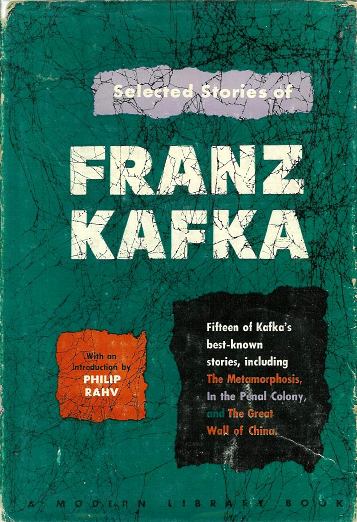
"The Metamorphosis" by Franz Kafka
Thank goodness this is a short story because I don't think I could have suffered through a full-length novel by Kafka. I read this years ago in school (can't remember if it was high school or college, but either way, it was many, many years ago) and didn't like it then. The title is on that infamous classics list of mine, so I thought I'd give it another go. After all, when I re-read "Call of the Wild", I loved it; perhaps that magic would strike again.
No such luck.
To give you an idea of how much I did not like this story, it took me 3 nights to get through it (and it's not even 100 pages long, at least, not in the version I found). Kept falling asleep waiting for something to happen.
The story is very basic: Gregor Samsa, a travelling sales clerk, wakes one morning to find he's no longer human. He is now an immense insect. Which, of course, means he can no longer go to work, interact with his family, go out in public, etc. The story is pretty much him in his little insect head, observing his family and how they try to care for him, and his existence for a few months after his "metamorphosis".
The only thing I did get on this 2nd reading is that it doesn't seem so much Gregor that undergoes a change but his sister, Grete. She starts the story very shy, mousy, almost scared of her shadow. In caring for Gregor's insect self, she becomes a bit braver, until she is the one at the end of the story declaring that it can't go on the way it is, that something must be done with "it" (meaning Gregor). Indeed, the last scene is the family minus Gregor walking outside in the fresh air, and Grete's parents noticing how pretty she is, and how it's time to think of finding her a suitable husband.
Yawn.
I will admit that I tried to read a second story in the collection I picked up, thinking that perhaps I just wasn't into "The Metamorphosis" itself. I read "The Judgment", and I have to say, my judgment is that I simply do not "get" Kafka.
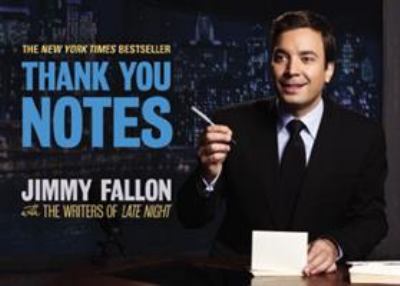
"Thank You Notes" by Jimmy Fallon
At first I felt guilty for counting this "book" on my reading challenge (100 books = 2012 goal). I mean, really... it's not a "real" book, is it? It's just a bunch of little thank you notes, each getting its own page, and it took all of a half-hour tops to read. So why count it? And why count it "legally"?
Well, I'll tell ya. I thought about it after I got thru the guilt, and I realized that yes, this is a book. It's short, true, but it's funny. And believe it or not, it even made me think a time or two. It brought joy to my life, and isn't that what any book should do?
So thank you, Jimmy Fallon, for helping me inch ever closer to my 2012 reading goal.
Monday, May 14, 2012
"Our Red Hot Romance is Leaving Me Blue" by Dixie Cash
Full-time hairdressers and part-time private detectives, Debbie Sue Overstreet and Edwina Perkins-Martin - the Domestic Equalizers - have dealt with cheating spouses, shady business deals, Elvis-obsessed shoe thieves, even murder. But ghosts? That's a whole new rodeo!
Justin Sadler's just coming to terms with the absence of his dear departed Rache - but now he's not so sure she's departed! Every time he goes home he knows someone's been there - and if it's not Rachel trying to communicate from beyond, it's someone else who's trying to drive him stark raving bonkers. So the Equalizers are on the case, with the help of an El Paso psychic who's so dead-on, it's scary. It's enough to make any good ol' gal's big hair stand on end!
The investigation leads them toward one of their tiny West Texas Town's more unsavory characters - and, all things considered, Debbie Sue would much rather be cuddling in the arms of her hubby, the sexiest cop in the whole nation of Texas. But the Equalizers will never say die...even when dealing with the restless dead.
As always, a cute read featuring two of the nicest (and sometimes foul-mouthed) women this side of the Mississippi. I've read all of the Dixie Cash books featuring the Domestic Equalizers, and if you're looking for a "fluffy" yet fun read, these are for you.
The description pretty much says everything you need to know about the story. I did like that there was more interaction between our two hapless heroines this time around; the relationship between Debbie Sue and Edwina is what really makes these books. When only one of them is on the receiving end of the storyline, it tends to fall a bit flat. Together, these characters are unstoppable - and just lovable as well.
I thought the "love interest" characters were well-written this time, too. And no "cute meet" this time, which was wonderful! Sophia is legitimately contacted as the psychic, and so she's really Justin's employee (for a very brief moment in time). It was also nice to read about a character who truly loved his wife; his hope that maybe his dearly departed sweetie is trying to contact him from beyond the grave was quite moving.
As usual, I highly recommend this for a fun, quick read. And beach season is quickly approaching - this would be PERFECT for that!
Subscribe to:
Posts (Atom)